
contact usAsk for a method statement.
Tell us the structure, the water condition and the access you have, and our technical team will write the build-up for your project.


Contacts
Maslak Mh. Ahi Evran Cd. No:21
Polaris Plaza - Floor 26
SARIYER | ISTANBUL / TURKIYE
TR: +90 212 706 97 61
GEO: +49 4921 825 8979
DE: +49 4921 825 8979
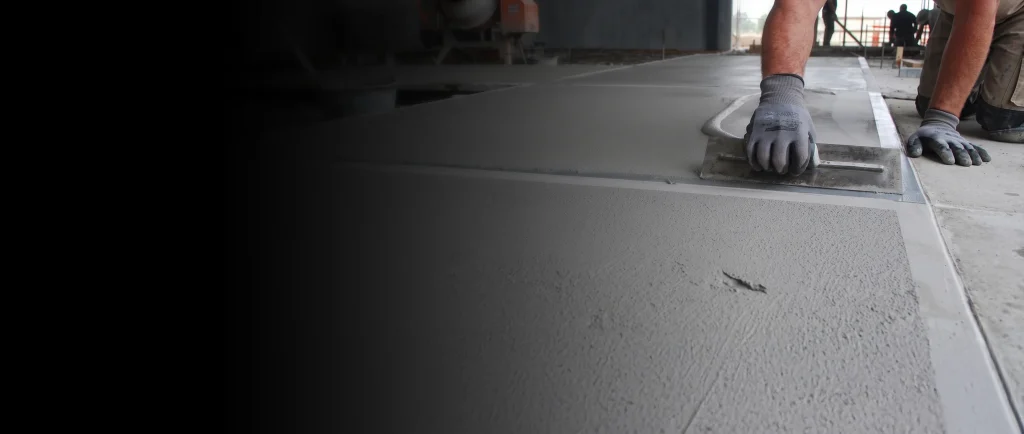
Concrete does not fail on its own. It fails because something reached it: water, chloride, movement, load or time. These systems repair the damage and address what caused it, from a thin surface patch to the structural repair of a load-bearing element.
• A repair mortar will hide anything. Applied over a corroding bar, a live crack or a wall that is still taking in water, it will look finished on the day it is done and will fail again in the same place, usually within two winters.
• So repair begins with diagnosis rather than with mortar. What caused the damage, is the cause still active, and does the repair have to carry load or only close a surface? The answers decide the system, and they also decide whether waterproofing or protection has to be part of the work rather than a later job.
” Where the cause is water, the repair is a waterproofing job with a mortar in it. Where the cause is movement, a rigid mortar will crack again in the same line.”
• Loose and hollow material removed until only sound substrate remains
• Edges cut back square rather than feathered to nothing
• Dust removed, surface dampened
• DAUGUARD B-PRIMER on bare concrete, or DAUMIX ELIXIR as a bonding coat where adhesion is doubtful
A thin repair mortar has one job that is harder than it looks: to stay attached to a substrate that is older, drier and stiffer than it is. It does that by bonding into the open pores of the prepared surface, which is why the preparation matters more than the mortar.
The repair is built up in the thickness the product allows and finished flush. Where the surface will be painted, DAUFORM PROFP50 takes it from repaired to smooth, closing the fine cracks and the difference in texture between old and new.
• Cure protected from wind and direct sun
• Painting or coating only after the repair has cured and dried back

A feathered edge is the most common reason a thin repair lifts. Cut the edge square, to a depth the mortar can hold, and the repair has something to key into instead of a knife edge that will be knocked off.
Key outcomes
• Fast, low-disturbance repair of surfaces that do not carry load
• A finished surface ready for paint rather than a visible patch
• Declared layer by layer: the repair mortar under EN 1504-3,
the finishing skim under EN 998-1
Products
• DAUMIX ELIXIR · bonding agent, mixed with cement as a slurry
bond coat and applied wet on wet
• DAUFORM RPM-L · high-strength cement-based repair mortar for thick sections
• Complementary · Required where water is the cause
• Waterproofing addressed as part of the repair, not after it.
• Crystalline treatment or a coating system depending on the structure.
Joints and penetrations · Optional
– PB-12 tape at junctions the sheet cannot dress cleanly
– GB-20 PVC waterstop where a movement joint passes through the structure

When it is preferred:
The damage is deep or wide, and the concrete around it does structural work. Spalling over corroded reinforcement, wide cracks, damaged column and beam faces, and any repair that has to be built up in real thickness.
• Damaged concrete removed back to sound material, and behind the reinforcement where corrosion is present, not only in front of it
• Reinforcement cleaned mechanically to bright metal on all sides
• The cause identified and stopped: if chloride or water is still reaching the bar, the repair will fail again
• Edges cut square
• Substrate brought to saturated surface dry: damp throughout, no free water on the surface
• DAUMIX ELIXIR mixed with cement as a bond slurry, applied wet on wet immediately before the mortar
A structural repair mortar has to do more than fill a hole. It has to reach a strength and stiffness compatible with the concrete around it, bond well enough to transfer load across the interface, and shrink as little as possible while it cures, because shrinkage is what tears a repair away from its edges.
DAUFORM RPM-L is formulated for thickness. It can be built up in deeper layers than a thin repair mortar and holds its position on vertical and overhead surfaces, which is where most structural repairs are.
• Cure protected; a repair that dries too fast cracks at its edges
• Surface protection applied where the exposure that caused the damage is still present
Repairing over a corroding bar without removing the chloride around it buys about two winters. The concrete behind the bar has to come out, not just the concrete in front of it. Nothing is painted onto the bar itself: an acrylic or alkyd primer on steel inside concrete traps moisture against the metal and accelerates what it was meant to stop.
Key outcomes
• Repairs that carry load and stay attached
• Thickness built in fewer passes, including overhead
• Declared under EN 1504-3
Products
• DAUMIX ELIXIR · bonding agent, mixed with
cement as a slurry bond coat and applied wet on wet
• DAUFORM RPM-L · high-strength cement-based repair mortar for thick sections
Complementary · Required where water is the cause
– Waterproofing addressed as part of the repair, not after it.
– Crystalline treatment or a coating system depending on the structure.
When it is preferred:
The surface has to be handed back to traffic within the hour. Manhole cover frames and chamber seatings, foundation sockets, base plates, column heads, and contained repairs in a road or yard slab that cannot be closed for a day.
• Loose and defective material removed, edges cut square
• The area contained: this is a flowable mortar, so it needs formwork or a closed recess to pour into
• Substrate saturated surface dry, with no standing water
• Only as much material mixed as can be placed inside its working time
DAUFORM GROUT (RAPID) is a cement-based, high-flow, non-shrink mortar that gains strength quickly and can carry traffic within an hour of placing. It is self-levelling, so it fills the space around a frame or under a base plate completely, including the parts a trowel cannot reach, and its low shrinkage keeps it there once it has set.
Speed is the reason to choose it and also the discipline it demands. The working time is short, so the whole area is prepared and the formwork is ready before mixing begins, and batches are kept small.
• Traffic returned according to the strength gain stated in the data sheet, not by appearance
• Cure protected in hot or windy conditions
Formwork struck after the stated time
This is a pour, not a patch. A flowable grout needs somewhere to be contained; on an open, sloping or vertical surface it will find its own level and leave the repair short. Prepare the containment before the water goes in the bucket.
Key outcomes
• Trafficable within one hour of placing
• Complete filling around frames and base plates, with no shrinkage away from the edges
• Declared under EN 1504-3
Products
• DAUFORM GROUT (RAPID) · rapid-curing, high-flow, non-shrink cement mortar, trafficable within one hour
• DAUFORM GROUT (NORMAL) · the same work where speed is not the constraint
Complementary · Optional
– Where the repair sits in a wet chamber, waterproofing is treated as a separate step
– Where the surface is vertical or has to be shaped by hand, this is not the system; use system 1 or 2
• Substrate sound, dry and mechanically prepared
• Oil, grease and curing compound removed; epoxy will bond to • concrete but not to contamination
• Components mixed in the stated ratio, fully, including the sides of the container
Epoxy cures by chemical reaction, not by drying, so it reaches high compressive and impact strength and does not shrink the way a cement mortar does. That combination is what makes it the material for fixing: a profile bedded in epoxy stays where it was set.
Its resistance to water, chemicals, oils and abrasion is the second reason it is chosen, and it is why epoxy repairs survive in places where a cement repair is attacked by what is spilled on it.
• Full cure before load is applied
• Adjacent floor coating applied only after the repair has cured
Epoxy is unforgiving about two things: mixing ratio and surface contamination. Both failures look identical afterwards, and both are avoidable before mixing starts.
Key outcomes
• High compressive and impact strength with no shrinkage
• Resistance to water, chemicals, oils and abrasion
• Declared under EN 1504-3
Products
• DAUPOXY FIXER 2K · two-component solvent-free epoxy repair and fixing mortar
Complementary · Optional
– Where the whole floor is being renewed, the repair is coordinated with the flooring system rather than done separately
When it is preferred:
A load-bearing element has segregation, honeycombing or wide cracking, or the repair sits under dynamic load. Machine and crane bases, bridge bearings, runways and rail beds, metro and tunnel work, dam structures, and columns and walls where the concrete did not reach the formwork properly on the day.
The surface decides the method. On horizontal work the mortar is placed and levels itself. On vertical work the element is formed again and the void is filled by pouring.
Both methods
• Defective concrete removed to sound material, past the reinforcement where the void goes behind it
• Surfaces dry and free of oil, grease and curing compound
• Three components mixed in sequence and in full, including the sides of the container
Vertical work, additionally
• Formwork rebuilt tightly against the sound concrete around the void, sealed at every edge
• A pouring head formed at the top so the material enters above the level it has to reach
• An air path left at the highest point so the void can vent as it fills
Both products are three component epoxy systems that flow, fill completely and cure without shrinking. The difference is the job.
DAUPOXY MORTAR SF 3K is used where the repair is open and horizontal. It is self-levelling, so it settles into a large area and finds its own surface, reaching behind reinforcement on the way.
DAUPOXY FULLFIX GROUT 3K is the flowable casting grout, and it is what a vertical segregation needs. The damaged part of the column or wall is formed again as though it were being cast for the first time, and the grout is poured in from the top. It travels down through the void, around the bars and into every corner the original pour missed, then cures without pulling away from the faces it has bonded to. The formwork is struck after the stated cure and the element is back to its original profile.
Under dynamic load, this is the whole point. A repair with voids behind it works loose under vibration, and a repair that shrinks separates from the concrete it was meant to join.
• Formwork struck only after the stated cure
• Full cure before dynamic load is reapplied
• Any pouring head cut back and the surface made good
A formed vertical repair fails for the same reasons the original pour did: a leaking form, no pouring head, and no way for trapped air to escape. Build the formwork as though the element were being cast for the first time, because that is what is happening.
Key outcomes
• Complete filling with no shrinkage, including behind reinforcement
• Vertical elements returned to their original profile rather than patched on the face
• Resistance to freeze-thaw cycling, chemicals and dynamic load
• Declared under EN 1504-3
Products
• DAUPOXY MORTAR SF 3K · three-component self-levelling epoxy mortar for open, horizontal repairs
• DAUPOXY FULLFIX GROUT 3K · three-component flowable epoxy casting grout for formed vertical repairs, anchoring and base plates
Complementary · Optional
– DAUFORM GROUT (NORMAL) / (RAPID) where the work also includes cement-based grouting
When it is preferred:
A dormant crack has to be structurally reconnected, or damp is seeping through porous concrete and the water side cannot be reached. Basement and retaining walls, lift pits, tunnels, stone and solid brick masonry, and dowel holes that have to be filled.
• Crack traced along its full length and its behaviour assessed: dormant or still moving
• Injection packers drilled at an angle to intersect the crack inside the element, spaced to suit the wall thickness
• Loose material and surface deposits removed
• Component ratio set for the reaction time the work needs
DAUPRO WATERSTOP PUR-JET is a two-component, low-viscosity polyurethane injection resin. Its viscosity is low enough to travel into capillary cracks, and it bonds to both concrete and steel, so once cured it does not simply fill the crack but reconnects the two faces of it. It can be injected into damp cracks, which is when most cracks are found.
The reaction time is set on site. A professional applicator adjusts the ratio between the components according to how long the resin needs to stay fluid before it sets, which is what allows the same product to be used on a hairline crack in a wall and on a deeper void behind a retaining structure.
• Packers removed and holes made good
• Structure observed through a wet period before finishes are reinstated
This resin bonds a dormant crack and seals seepage. It is not a plug for running water: where water is under pressure and flowing, the flow has to be stopped by other means before injection begins, or the resin washes out before it cures.
Key outcomes
• Structural reconnection of dormant cracks, declared under EN 1504-5
• Application on damp concrete, which is when cracks are usually found
• Reaction time adjustable on site to suit the crack
Products
• DAUPRO WATERSTOP PUR-JET · two-component structural polyurethane injection resin, EN 1504-5, applicable to damp surfaces
• DAUPRO WATERSTOP KRISTALIZE K-1 · crystalline treatment across the surface where damp persists after injection
Complementary · Required where the crack is still moving
– A moving crack is a joint. Filling it with a rigid resin returns it to the same failure in the same line; it is treated as a movement joint with the appropriate band or sealant.
When it is preferred:
The repair is done and the exposure that caused the damage is still there. Basement and garage walls, laundry rooms, bathrooms and kitchens, sea-facing buildings, and internal walls in older buildings where damp and mould keep returning.
• Repairs cured and dried back
• Surface clean, sound and free of existing mould growth
• Absorbent surfaces primed where the data sheet requires it
The coating is hydrophobic, so it keeps liquid water off the surface, but it remains permeable enough for the wall to release the moisture already inside it. That combination is the point: a sealed wall traps moisture and pushes the problem deeper, while a breathable water-repellent surface lets the structure dry outward.
The active biocide content suppresses the mould and mildew growth that follows persistent damp, which is what most occupants actually notice.
• Second coat applied after the first has dried
• Ventilation restored where the damp was caused by its absence
A protective coating is not a waterproofing layer. Where water is arriving under pressure, it will find its way out somewhere else. Fix the source first and protect the surface second.
Key outcomes
• Liquid water repelled while the wall continues to dry outward
• Mould and mildew growth suppressed
• Declared under EN 1504-2, with high vapour permeability
Products
• DAUFARBE TECHNISCH DRYTECH MB-200 · moisture barrier coating with biocide, two coats
Complementary · Optional
– Where the structure is permanently immersed rather than damp, the coating for that condition is DAUFARBE TECHNISCH AQUATECH PP-200, covered in the pool and water tank systems
Tell us the structure, the water condition and the access you have, and our technical team will write the build-up for your project.